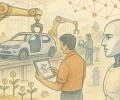
Indian companies showcased their quadruped robots at the Bengaluru Tech Summit, with General Autonomy's Param winning a race. The event highlighted India's growing capabilities in robotics and Physical AI, with robots designed for defence, industrial surveillance, and security applications.

Veteran physicist Professor Umesh V Waghmare has been appointed as the Secretary of the Department of Science and Technology. Currently a professor at JNCASR, Bengaluru, his appointment was approved by the Appointments Committee of the Cabinet. He succeeds Professor Abhay Karandikar and brings a distinguished academic background from IIT-Bombay, Yale, and Harvard to the role.

Indian physicist Professor Ashoke Sen has been awarded the prestigious Oskar Klein Medal for 2026, making him the first Indian to receive this honour. Recognised for his groundbreaking work in string theory, including S-duality and black hole entropy, Sen delivered the memorial lecture at Stockholm University. He has previously received numerous accolades such as the Breakthrough Prize, Dirac Medal, and Padma Bhushan.
Indian physicist Ashoke Sen has been awarded the prestigious 2026 Oskar Klein Medal, making him the first Indian to receive this honour. Sen, a leading figure in modern string theory, was recognised for his pioneering work, including contributions to S-duality, black-hole entropy, and string field theory. He delivered a memorial lecture on October 22 in Stockholm.

The National Council of Educational Research and Training has reconstituted the Textbook Development Team for class 11 and 12 political science with a mandate to integrate cultural rootedness, Indian knowledge systems and inclusion, with at least four of the members having direct or indirect links with the RSS.
Delhi-NCR has become India's leading centre for AI-enabled robotic-assisted cardiac surgeries, with 21 installations and approximately 1,800 procedures performed in 2025. Experts predict a 40 per cent rise in 2026, driven by advanced medical infrastructure and growing adoption. This minimally invasive approach offers benefits like reduced trauma and faster recovery, positioning India to potentially surpass the US in such procedures by 2031.

An IIT Madras study reveals that financial cybercrime victims in India are often highly educated professionals, challenging the notion that only careless or financially unaware individuals are targeted. The research highlights that digital literacy doesn't guarantee protection, as fraudsters exploit stress and emotional vulnerabilities.
Indian physicist Deepak Dhar, a professor at ICTS-TIFR in Bengaluru, has been awarded the prestigious 2026 Dirac Medal for his significant contributions to statistical mechanics. He shares the honour with three other physicists for their work on understanding complex systems, with applications in diverse fields like biology, finance, and AI. Dhar is particularly recognised for his "sandpile model" and has previously received the Padma Bhushan and Boltzmann Medal.

The Kerala Crime Branch has arrested Raveendran Nair, former caretaker of Jayamadhavan Nair, for his murder nine years ago. The investigation, initially treated as an unnatural death, gained momentum through forensic evidence, contradictory statements, and a forged will, leading to the unravelling of a property dispute motive.
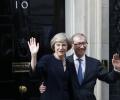
Professor Deepak Dhar of the International Centre for Theoretical Sciences (ICTS) has been awarded the prestigious 2026 Dirac Medal for his significant contributions to statistical mechanics and complex systems. He shares the honour with three other scientists for their pioneering work extending statistical mechanics into diverse fields like AI and theoretical neuroscience.
A recent study by the Indian Institute of Science (IISc), Bengaluru, has identified self-fertilisation, or uniparental reproduction, as a critical trait enabling plants to become invasive. Researchers examined 28 species from the daisy family, finding that all 11 invasive species studied could reproduce uniparentally, unlike most native and non-invasive alien species. This ability allows a single plant to establish new populations, displacing local flora and altering ecosystems, highlighting the importance of reproductive strategy in weed-risk assessment.
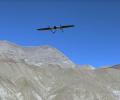
The 515 Army Base Workshop in Bengaluru has signed multiple strategic MoUs to bolster indigenous drone manufacturing and ecosystem resilience, marking a significant step towards modernisation and self-reliance in unmanned systems.

Their message is blunt: Public scientific wealth should not be transferred at what they describe as 'throwaway prices'.capability, recruitment, promotional avenues and the voice of its employees.
Researchers at the Indian Institute of Science (IISc) in Bengaluru have discovered that oral cancer cells are vulnerable to low-frequency ultrasound, a technique that can selectively destroy them while leaving healthy cells unharmed. This vulnerability is linked to reduced levels of the mechanosensory protein Tropomyosin 2.1. The study suggests ultrasound mechanostimulation could offer a safer, more targeted treatment for oral and other accessible cancers.

About 45 km from the tech hub of Bengaluru, the Karnataka government is planning a mega artificial intelligence (AI)-powered city with a budget of more than Rs 18,000 crore. To be spread over 9,000 acres, the project aims to follow the theme "Work, live, play" with technology as its core. At the centre of it are, however, thousands of farmers who are protesting against land acquisition by the government.

Indian pharmaceutical companies are not rushing to relocate manufacturing to the United States despite former President Donald Trump's renewed threat of tariffs up to 200 per cent on imported generic drugs. Instead, they are leveraging existing US plants, contract manufacturers, and making selective investments in complex products while maintaining India as their primary production hub.

The question for the next 20 years is not whether India can become a $5 trillion or $10 trillion economy. Those are attractive targets, but the real question is whether India can create enough productive jobs, educate its children properly, make its cities liveable, and give hundreds of millions of people a substantially better life, asserts Ramesh Menon.

The aim is to win over the country's enterprises, developers and startups as AI systems shift from answering questions to autonomously executing tasks.

'Think of the brain like a machine, and Alzheimer's is like rust.'
'Like a rusty machine breaks down, a rusty brain also breaks down. And when it breaks down, you have memory loss, cognitive issues and so on.'
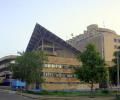
Three Indian universities feature in the top 200.

The Union health ministry has deployed a National Joint Outbreak Response Team (NJORT) to Gujarat and Rajasthan to strengthen the response to the ongoing Chandipura Virus Disease (CHPV) outbreak.

'Improved law and order and transparent governance have helped change UP's investment image.'
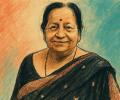
In Professor Sulochana Gadgil's passing, India has lost a scientific giant, a fierce intellect, and a compassionate soul, remembers Dr Madhavan Nair Rajeevan.

India has launched an open Health AI benchmarking platform to evaluate artificial intelligence models on diverse Indian datasets before deployment at a population scale. The initiative aims to strengthen AI-driven claims management under the Ayushman Bharat Pradhan Mantri Jan Arogya Yojana (AB PM-JAY).
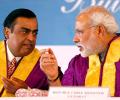
Greater autonomy, freedom to recruit faculty and government funding are just some of the perks these institutes will enjoy.

Comptroller and Auditor General of India K Sanjay Murthy highlighted the need for stronger accountability systems to support India's urban transformation and sustainable mobility push at the BRICS Supreme Audit Institutions Leaders' Summit in Bengaluru.

Noted ecologist Madhav Gadgil, known for his work on the conservation of Western Ghats, has passed away in Pune after a brief illness. He was 83.

IIT Madras tops NIRF rankings for 7th year; IISc Bengaluru best university, research institute

One of the most important provisions this year is that qualifying NEET-PG does not automatically guarantee participation in counselling.
The 515 Army Base Workshop (ABW) in Bengaluru has signed multiple MoUs to strengthen indigenous drone manufacturing and ecosystem resilience, marking a significant step towards modernisation and self-reliance in unmanned systems.

BJP state president Rajeev Chandrasekhar, contesting from Nemom, Kerala, declares assets exceeding 93 crore, including movable and immovable properties, ahead of the upcoming Assembly elections.
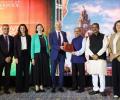
Initially, we will look to take a small batch of a few hundred students, with a plan to increase this to 5,000 students in the next five years, and eventually 10,000 by 2036.'

India has launched its first repository of data on major psychiatric disorders, CALM-Brain, in Bengaluru. This initiative aims to systematically document details of patients with mental illness to improve diagnosis and treatment.

Indian astronaut Shubhanshu Shukla stands on the cusp of history as he prepares to set off on a space odyssey, marking India's return to space flight 41 years after his idol Rakesh Sharma orbited the earth for eight days as part of Soviet Union's Interkosmos programme.

Interestingly, with 83 per cent of entrepreneurs being first-generation founders, the list reflects India's growing spirit of entrepreneurship and leadership.

'Our problem is not a budget deficit but a trust deficit. We need to trust our institutions and industries to innovate and lead. That is the way forward for India.'

Researchers have developed an AI algorithm capable of generating intricate 'sikku' kolam patterns, traditionally drawn by hand in South India. This innovative approach transforms a cultural art form into a complex computational challenge, with potential applications in various fields.

Scientists at the GraphIN 2026 conference highlighted the potential of ultra-sensitive graphene sensors for rapid disease detection and various other applications, including flexible heating pads for neonatal care and lightweight structures for unmanned aerial vehicles.
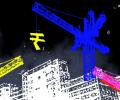
The growth was primarily driven by domestic investments, which accounted for 60 per cent of the total inflows during the first quarter of the financial year.

The Indian Institute of Science, Bengaluru is placed in the 301-350 group of the Times Higher Education Rankings 2020 released Wednesday.
